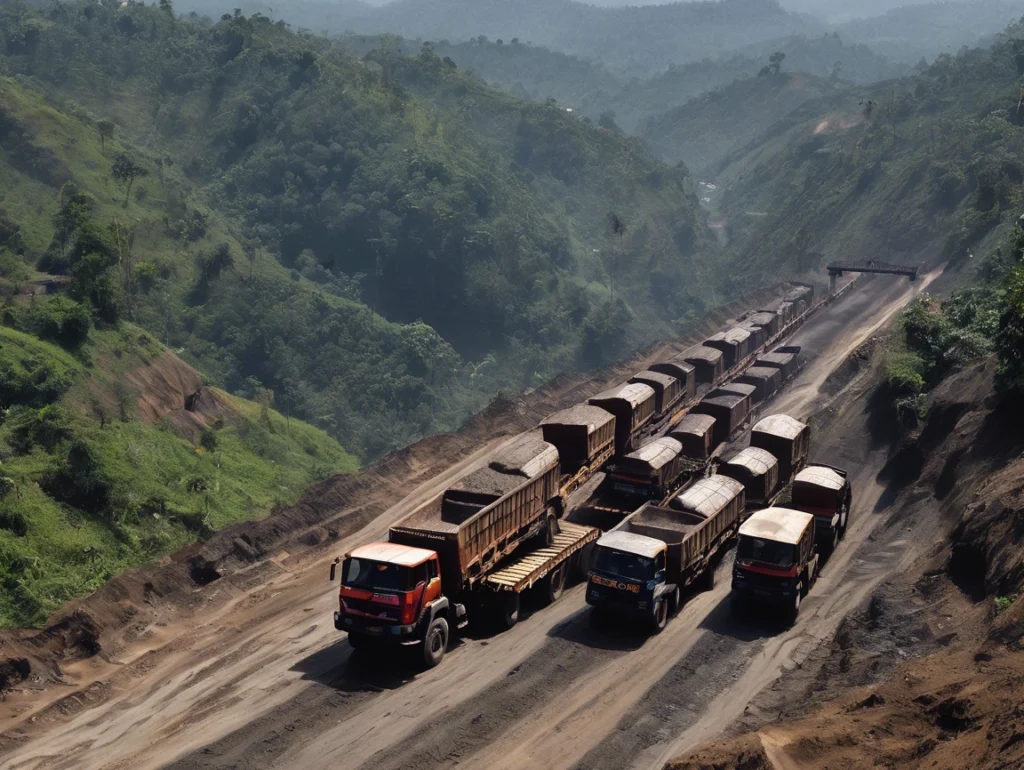
Meghalaya has officially started the transport of coal from its first scientific mining block, marking a shift from unsafe rat-hole mining to sustainable practices.
A New Era for the State’s Economy Byrnihat, Meghalaya In a historic step towards sustainable resource management, Meghalaya officially began the transportation of coal from its first scientific coal mining block. The event took place at 17th Mile, Byrnihat near Guwahati on Wednesday, where two coal-laden trucks—one headed to Bihar and another to Uttar Pradesh—were ceremonially flagged off by a traditional Khasi king.
Beginning of Scientific Coal Mining in Meghalaya
The Saryngkham-A coal mine at Byndihati in East Jaintia Hills, recently inaugurated by Chief Minister Conrad Sangma on March 17, has become the first operational block under the state’s scientific coal mining initiative. The mining lease for this block is owned by Dapmain Shylla.
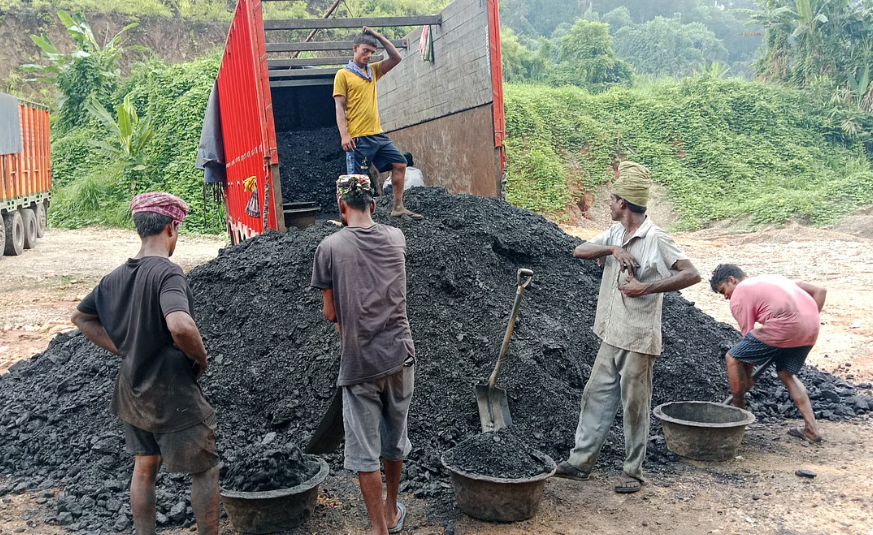
This development marks a significant shift away from unregulated “rat-hole” mining, which had long plagued Meghalaya with environmental degradation and miner fatalities.
Why This Milestone Matters?
Prior to the 2014 blanket ban imposed by the National Green Tribunal (NGT), coal mining generated around ₹700 crore annually for Meghalaya. However, unsafe practices and lack of scientific methods led to multiple accidents and loss of lives, especially in the coal-rich Jaintia Hills region.
After years of legal battles, the Supreme Court lifted the ban in 2019, paving the way for the introduction of scientific mining methods. In January 2024, agreements were signed between the Centre and three miners from Meghalaya to formally begin operations under strict safety and environmental guidelines.
Boost to Economy and Curb on Illegal Mining
The flag-off event witnessed participation from traders of Bihar and Uttar Pradesh, who expressed optimism about this transparent and legal trade process. The coal transportation is now supported by valid GST papers, ensuring compliance with regulations and putting an end to illegal coal trade and the notorious “goonda tax” that traders previously had to pay.
With scientific mining, Meghalaya aims to reduce India’s dependence on imported coal while generating employment and revenue for the state. Till now, 12 mining leases have been approved under the new system.
A Positive Step for Meghalaya’s Future
The successful implementation of scientific coal mining is expected to:
- Create new job opportunities for local communities
- Increase state revenue through legal coal trade
- Minimize illegal and unsafe mining activities
- Promote sustainable resource utilization
This transition signals a new chapter for Meghalaya’s economy, ensuring that coal mining is done in a safe, regulated, and environmentally responsible manner.
FAQ’s
-
What is scientific coal mining in Meghalaya?
Scientific coal mining refers to regulated and environmentally responsible coal extraction using modern methods and safety standards, as opposed to unscientific “rat-hole” mining.
-
Why was coal mining banned in Meghalaya in 2014?
The National Green Tribunal (NGT) banned coal mining in 2014 due to widespread environmental damage and frequent miner fatalities caused by unsafe, unscientific mining practices.
-
When did Meghalaya restart coal mining legally?
Meghalaya restarted coal mining after the Supreme Court lifted the ban in 2019. The first scientific coal mine, Saryngkham-A in East Jaintia Hills, was inaugurated in March 2024.
-
How will scientific coal mining benefit Meghalaya?
It will boost the state’s economy by increasing legal revenue, reducing illegal mining, creating jobs, and decreasing India’s dependence on imported coal.
-
Who owns the first scientific coal mining block in Meghalaya?
The first scientific coal mining block, Saryngkham-A in Byndihati, East Jaintia Hills, is owned by Dapmain Shylla.