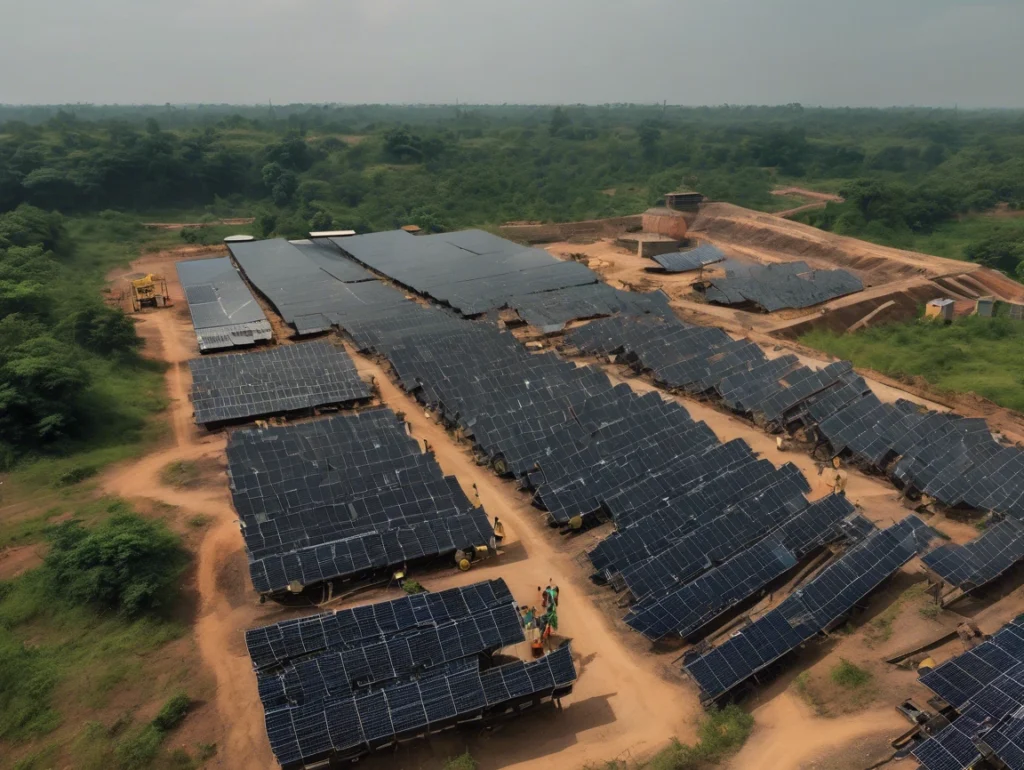
Discover how Coal India Limited is transforming abandoned coal mines into solar parks, eco-parks, and livelihoods while ensuring a just transition for communities.
Why is it necessary to regenerate mined land?
India continues to rely on coal for around 60–74% of its electricity generation.
Coal India Limited (CIL), the world’s largest coal producer, is reopening 32 defunct mines to meet growing energy demand, while simultaneously exploring renewable and ecological uses for closed mine lands.
The transformation of abandoned coal sites into solar parks, fish farms, and ecotourism hubs signals a shift from extraction to regeneration.
Coal India Limited and Mine Regeneration Efforts
Reopening dormant mines: In 2024–25, CIL reopened 32 mines on a revenue-sharing model, partnering with private operators for production ramp-up.
Ecological restoration: CIL has transformed over 4,392 hectares into green spaces, planted 3 million+ saplings in fiscal 2022, with an annual carbon sink potential of ~220,000 tonnes.
Eco‑tourism & coal museums: Sites like Saoner Eco Park (Nagpur) feature coal museums and educational attractions aimed at reframing mining narratives through public outreach
From Coal Pits to Solar Farms: Unlocking Renewable Potential
Global capacity potential: Converting abandoned mines could add up to 300 GW of solar energy globally by 2030—enough to power a country like Germany.
India’s solar opportunity: Over 63 defunct coal mine sites across India (500+ sq km) could generate approximately 27 GW—about 37% of India’s current solar capacity. Key states include Telangana, Odisha, Madhya Pradesh, and Chhattisgarh
downtoearth.
Economic & social benefits: A mine-to-solar shift is estimated to create 259,700 permanent and 317,500 temporary jobs in India—exceeding anticipated job losses in the coal sector.
Policy Framework & Just Transition Strategy
Mine closure guidelines: While 299 coal mines were set for closure by January 2024, only a few have gone through proper scientific reclamation, managed by the Coal Controller Organisation.
Just transition policy elements: The TERI-led framework emphasizes procedural, distributive, and restorative justice—ensuring affected communities receive compensation, training, and alternative livelihoods during mine transitions.
State and local plans: Maharashtra’s new rules mandate rehabilitation within one year, transforming abandoned mine pits into rainwater harvesting sites, fisheries, or eco-tourism destinations, promoting safety and sustainable reuse.
Community and Livelihood Impacts
Rural dependence on coal: Studies in Telangana show local communities become increasingly dependent on informal coal-sector jobs as mining expands—often at the cost of traditional agriculture and forest-based livelihoods.
Hasdeo Arand block narrative: In forest-rich Chhattisgarh, communities have mobilized against harmful coal expansion threatening ecology and local livelihood, such as the Parsa East & Kanta Basan project.
Social planning: India’s first social transition plan for closed coal regions (with World Bank support) includes census-like community surveys, alternative job training, and services protection measures.
India stands at a crossroads—balancing its energy security needs via coal with global and national commitments to reduce emissions and support livelihoods.
Coal India’s dual strategy of reviving select mines for production while repurposing closed sites into solar, ecological, and community-centered assets illustrates a promising transition.
From solar potential and job creation to social justice frameworks and policy innovation, India’s coal sector regeneration offers rich content for SEO-focused, impactful blogging.
read this: Environmental Management: Impacts & Sustainability
FAQs
-
How big is India’s coal mine solar potential?
Over 500 sq km of abandoned coal mines can support ~27 GW of solar capacity (≈37% of current solar production).
-
How many coal mines does Coal India plan to reopen?
CIL plans to reopen 32 defunct mines and launch up to five new opencast sites in 2025–26 to meet energy demand.
-
What is a just transition in coal mining regions?
It is a policy framework guided by principles of procedural, distributive, and restorative justice, aiming to ensure fair compensation, livelihood planning, and community involvement during mine closures and land repurposing.
-
Are there successful mine-to-solar conversions in India?
While projects are mainly in planning/early phases, modelling and global examples suggest major potential, particularly in Telangana, Odisha, Chhattisgarh and MP.