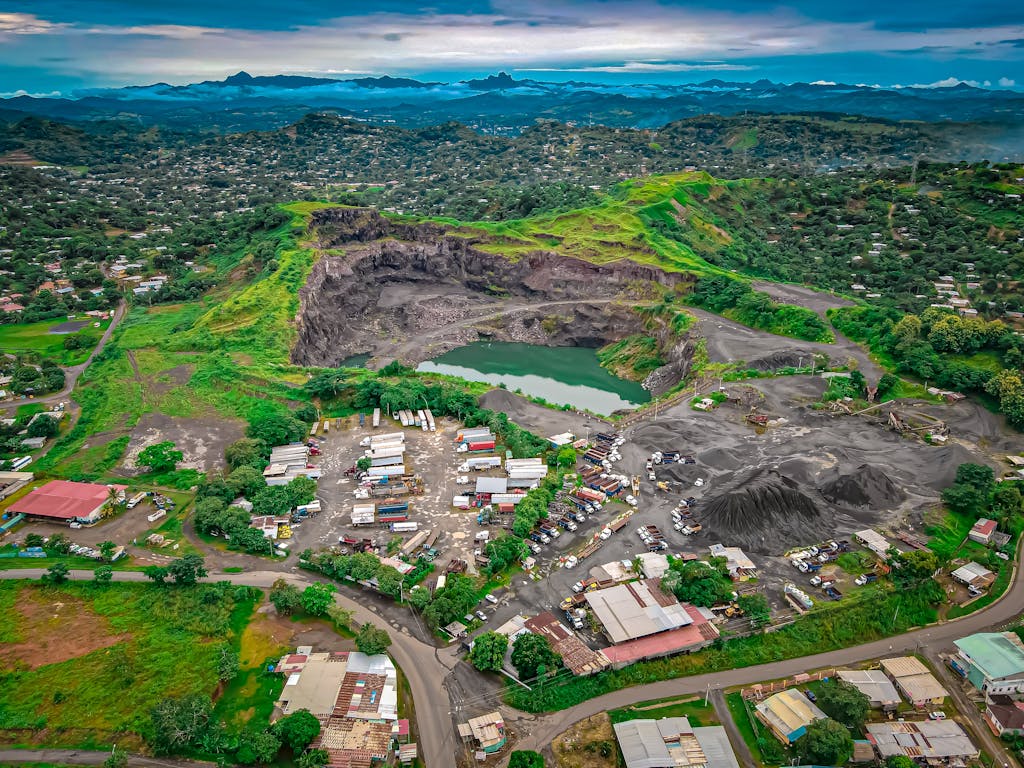
Coal and lignite PSUs in India have greened 13,400 hectares around mines from FY 2019-20 to FY 2024-25, with initiatives including afforestation, eco-tourism, pisciculture, pumped storage, and biodiversity restoration to balance environmental and economic growth.
Coal and lignite Public Sector Undertakings (PSUs) in India have successfully greened approximately 13,400 hectares around mining areas between fiscal year 2019-20 and 2024-25. Additionally, Coal India Limited (CIL) and its subsidiaries have achieved significant afforestation, planting over 30 lakh saplings and greening 4,392 hectares within mine-leased areas in FY23, contributing to a carbon sink potential of 2.2 liters/year.
Mine Reclamation and Green Initiatives in India
India’s mining sector has made strides in land reclamation and environmental restoration, transforming degraded areas into green spaces and productive land uses. This includes afforestation, development of eco-tourism sites, pisciculture, and even pumped storage projects.
Scope of Greening Efforts
From FY 2019-20 to FY 2024-25, coal and lignite PSUs have brought approximately 13,400 hectares around mining regions under green cover. This initiative is part of broader efforts to re-use abandoned mines for various purposes.
Beyond the 13,400 hectares, Coal/Lignite PSUs have collectively established green cover spanning about 50,000 hectares in and around coal mining regions over time. As of February 2023, Coal India had converted 30 abandoned mines into eco-tourism sites nationwide, including Kenapara Eco Park in Chhattisgarh and Ananta medicinal garden in Odisha.
Methods of Mine Reclamation
Mine reclamation involves restoring land disturbed by mining activities to a safe, environmentally sound state for future uses. This process typically includes site planning, contouring, grading, topsoil replacement, and revegetation.
Pisciculture: Abandoned mines are being repurposed into fish farms, such as the former open-cast mine in Jharkhand’s Barkasayal area, now an artificial lake used for harvesting fish. This specific project, managed by the Maa Bhavani Matasajibi Sahyog Samiti Limited, employs 57 people directly and benefits around 250 local villagers indirectly.
In the previous year, this society sold 42 tonnes of fish, primarily tilapia, generating a profit of approximately ₹20 lakh. Such initiatives can create significant employment opportunities, with one fishery having the potential to employ around 150 people.
Eco-tourism and Afforestation: Coal India Limited (CIL) has transformed shut mines into tourism sites and undertaken afforestation efforts to reclaim areas for agriculture and generate carbon sinks. In FY 2022-23, afforestation measures enabled the company to exceed its plantation target of 1510 hectares by 100 hectares.
An example is the Piparwar opencast coal mining project in Jharkhand, where reclamation work has been carried out on about 272 hectares, including tree plantations, an eco-park, and water bodies.
Pumped Storage Projects: India is exploring pumped storage in abandoned coal mines, with Coal India identifying 20 such mines for evaluation. The Singareni Collieries Company Limited (SCCL) plans to establish a 500 MW pumped storage project at the closed Medipally open cast mine in Telangana, estimated to cost around ₹3,000 crore and produce low-cost energy for 40 years.
Biodiversity Parks: The 692-acre Aravalli Biodiversity Park in South Delhi was developed on an abandoned open-pit quarry, restoring 450 acres of land over 20 years. This park has facilitated the return of 215 bird species, 115 types of butterflies, and 29 reptile species. The park also contributes to groundwater regeneration, clean air, and carbon capture.
Environmental Impacts of Mining and the Importance of Reclamation
Mining activities in India have various environmental impacts, including land degradation, deforestation, and pollution of water bodies. These impacts can lead to erosion, sinkholes, and loss of biodiversity.
For instance, coal mining in the Singrauli district of Madhya Pradesh resulted in a loss of 365 km² of dense forests and degradation of open forests. Between 1994 and 2022, mining reduced forest cover by 7.32%–17.61% and shrunk water bodies by 5.0%–10% on average. Mine reclamation is therefore crucial for restoring ecological balance, rehabilitating land for productive use, conserving biodiversity, and fostering economic development.
Tree Species Used in Indian Mine Reclamation
In India, forest tree species are commonly utilized for the reclamation of coal mine degraded land, making the selection of appropriate species essential.
A variety of native and exotic tree species have been planted across different mine reclamation sites in India to restore the environment and soil quality.
Commonly Planted Tree Species
Several tree species have been identified as suitable for reclamation efforts:
- Azadirachta indica: Commonly known as Neem, it is one of the tree species planted on restored coal mine areas.
- Dalbergia sissoo: Also known as Indian Rosewood, this species is used in coal mine reclamation projects.
- Gmelina arborea: Known as Gamhar, it is another species planted in restored coal mine sites.
- Grevillia pteridifolia: This species has shown success in afforestation efforts on the Amarkantak mine area.
- Eucalyptus camaldulensis: River Red Gum, an exotic species, has also been planted successfully in mine reclamation.
- Pinus roxburgii: Known as Chir Pine, it is another tree species used in the Amarkantak mine area reclamation.
- Pongamia pinnata: Also known as Karanj, this species is among those successfully planted in mine areas.
- Shorea robusta: Sal tree, this native species is used for restoration, though efforts remain insufficient.
- Anogeissus latifolia: Axlewood, another native species, has been initiated for restoration in degraded lands.
- Albizia lebbeck: Siris, this species is also part of restoration initiatives in central India. Two Albizia species have shown comparative performance and restoration potential on mine spoil in dry tropical regions of India.
Broader Categories and Reforestation Practices
Native tree species can be developed at reclaimed sites using container-grown saplings and seed ball techniques. The selection of tree species often prioritizes those native to the planting area and those suited to the specific landscape position of the mine site.
In many cases, mixed tree species, often six-month-old nursery-raised seedlings, are planted at a spacing of 2m x 2m on coal mine dumps. Fast-growing trees have also been found to have a promising effect on mine soil fertility and carbon storage in post-mining lands.
Beyond specific species, other types of vegetation introduced in reclamation areas include Falcataria moluccana, Enterolobium cyclocarpum, Cassia siamea, Shorea balangeran, and Acacia mangium. Afforestation practices, particularly with native species, are crucial for restoring and enhancing vegetation cover in mine areas.
FAQ’s
-
How much land has been greened around mines in India in recent years?
Between FY 2019-20 and FY 2024-25, coal and lignite PSUs in India have greened approximately 13,400 hectares around mining areas.
-
What are some innovative uses of abandoned mines in India?
Abandoned mines are being repurposed into eco-tourism sites, fish farms (pisciculture), pumped storage projects for renewable energy, and biodiversity parks.
-
How is Coal India Limited contributing to afforestation?
Coal India Limited and its subsidiaries planted over 30 lakh saplings and greened 4,392 hectares in FY23, creating a carbon sink potential of 2.2 liters/year.
-
Which tree species are commonly used for mine reclamation in India?
Common species include Neem, Indian Rosewood, Sal, Karanj, Chir Pine, River Red Gum, and Albizia, along with several native and fast-growing varieties.
-
Why is mine reclamation important for India’s environment?
Mine reclamation restores degraded land, supports biodiversity, prevents erosion, improves soil fertility, creates carbon sinks, and promotes sustainable livelihoods for local communities.